Grassroots Open Assistive Tech’s purpose is to document, curate, preserve, make accessible, and freely share assistive technology designs and information under open licenses, as well as providing coordination and education to affiliated communities.
We support disabled people in making their designs and builds available for public good, and in having free to use designs available to them for their own use.
By helping teach repair, maintenance, and customization skills, and providing an environment for those practices, we foster an ecosystem of repair and re-use, keeping disabled people mobile and independent, and keeping complex, expensive assistive technology devices from becoming trash and e-waste.
-
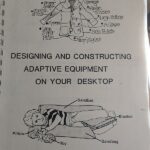 Designing and Constructing Adaptive Equipment
-
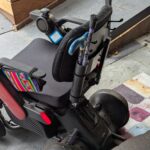 Cane holder and hooks, fitted to a powerchair
-
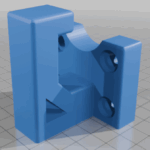 Bag hook mount, drawn for printing
Archive of DIY assistive tech information
Upcoming events
GOAT Learning Lab: Cushions 101
GOAT Space, behind Bookmark Bookstore, 10th & Broadway, Oakland
Details of GOAT Learning Lab: Cushions 101
Why does one wheelchair cushion feel stable while another lets you sink in? What happens when a ROHO is overinflated, gel shifts, or foam starts breaking down?
Join us for a hands-on look at wheelchair cushions and seating. We’ll sit on different foam, air, gel, and combination cushions, compare how they affect pressure, stability, movement, and transfers, and look at other supports that can make sitting easier — including backrests, lateral supports, tilt, recline, and leg elevation.
We’ll also demonstrate some of the simple tricks OTs use to trial positioning changes before ordering equipment, using things like towels, foam, and temporary supports.
No previous seating experience needed. Bring your butt!
Physical location: GOAT space (behind Bookmark Bookstore in Oakland)
Remote participation: https://us06web.zoom.us/j/88496547258?pwd=yQCP6uwPLrO2vzcFZAdqDK0TXQ3jaJ.1
Lesson plan: 2026-10 Learning Lab Notes
Past events
Promise and Pitfalls of Inclusive Design and Disability Technology (Jutta Trevinus and Liz Henry)
Details of Promise and Pitfalls of Inclusive Design and Disability Technology (Jutta Trevinus and Liz Henry)
Monday, October 19, 2026
5:00 — 6:30 PM
Eugene Jarvis Auditorium,
Grimes Engineering Center
RSVP here!
Save the event to your bCal here!
-
Inclusive design and disability technology — whether it uses AI or not — aims to make life easier and more fulfilling for people with disabilities. In this moderated discussion, two experts share their perspectives on the possibilities and perils of contemporary advances in the field of assistive technology.
Jutta Treviranus, Director and Professor at the Inclusive Design Research Centre, within the Ontario College of Art & Design University, will speak to the ever-expanding role of AI. As a statistical replicator feeding on available data, AI inexorably favours the average, popular, or profitable. Disability means you are an outlier in population data and the things you need have no economies of scale. The only common data characteristic of disability is sufficient distance from the majority that common things are not designed for you. While AI is uncannily good at helping achieve the average, AI eliminates difference. When decisions are made about people who are not average, this can lead to mechanized digital eugenics. This has grave implications for disabled people and minority communities but also for human survival.
Liz Henry, Executive Director of Grassroots Open Assistive Tech, will speak to the notion of designing ourselves as “sustainable cyborgs.” There exist many efforts to create assistive technology, often with fabulous cutting-edge engineering. People also love to create custom tools and materials for a particular disabled person, at hackathons and so on. What does designing for repairability and maintenance mean? What’s the experience like for someone to get their wheelchair repaired? What happens to the miracle devices when they break? And how can we save ourselves from the mountains of garbage and e-waste that overwhelm us? Henry will discuss repairability, design, and the promises of open source and open culture!GOAT Learning Lab: Find the Right Bolt
Details of GOAT Learning Lab: Find the Right Bolt
A bolt fell out of your wheelchair. Now what?
Come learn how to identify and replace common wheelchair hardware. We’ll explore metric vs. SAE bolts, thread sizes, lengths, nuts, washers, and different bolt heads — then practice measuring and matching mystery hardware ourselves.
We’ll also talk about where to find replacements locally and online, which substitutions are usually okay, and how using the wrong tool can turn a simple repair into a much more annoying one.
No previous repair experience needed. Expect lots of bolts!Physical location: GOAT space (behind Bookmark Bookstore in Oakland)
Remote participation: https://us06web.zoom.us/j/88496547258?pwd=yQCP6uwPLrO2vzcFZAdqDK0TXQ3jaJ.1
Lesson plan: 2026-10 Learning Lab NotesJoystick Repair Party
Details of Joystick Repair Party
How Many Joysticks Can We Resurrect?
We have 12 broken power wheelchair joysticks, repair tools, soldering equipment, and test power chairs ready to see what we can bring back to life.
Repairs range from simple button/contact fixes and cracked housings to cable splicing, mystery electrical faults, and PCB-level troubleshooting. None of these joysticks are in active use, so they’re safe to experiment on.
Come party with us 11 am–3 pm to diagnose, repair, solder, experiment, and learn together. Experience not required!
We’ll provide: joysticks, tools, repair materials, soldering equipment, and test chairs. Also snacks and sodas!
Location: GOAT Space, behind Bookmark Bookstore in Oakland
Zoom, 11 am–12 pm: You can join remotely during the first hour for the initial teardown, diagnosis, and discussion.
Join on ZoomTune Up Tuesday - SF Disability Cultural Center and Ed Roberts Campus
Details of Tune Up Tuesday - SF Disability Cultural Center and Ed Roberts Campus
Double feature event! Both are happening simultaneously 1:30pm - 4:30pm
- San Francisco at Disability Cultural Center - 165 Grove Street, San Francisco, CA 94102.
- Berkeley at Ed Roberts Campus - 3075 Adeline St, Berkeley, CA 94703.
Tune up your mobility device, get a fixit kit, learn more about community repair initiatives!
GOAT Learning Lab: Power Chair Batteries 101
Details of GOAT Learning Lab: Power Chair Batteries 101
What powers a power wheelchair? We'll open up a chair, find its batteries, look at how they're connected and discuss common battery problems. Participants will practice documenting connections, disconnecting/reconnecting batteries and doing basic voltage checks. No experience needed, questions are welcome.
Physical location: GOAT space (behind Bookmark Bookstore in Oakland)
Remote participation: https://us06web.zoom.us/j/88496547258?pwd=yQCP6uwPLrO2vzcFZAdqDK0TXQ3jaJ.1
Lesson plan: 2026-09 Learning Lab NotesGOAT Learning Lab: Wheels, Casters & Hairballs
Details of GOAT Learning Lab: Wheels, Casters & Hairballs
Wheelchair wheels collect an astonishing amount of hair and debris. We'll learn how common wheel and caster assemblies fit together, remove selected wheels, clean them, inspect the hardware and put everything back together.
No experience needed, questions are welcome.Physical location: GOAT space (behind Bookmark Bookstore in Oakland)
Remote participation: https://us06web.zoom.us/j/88496547258?pwd=yQCP6uwPLrO2vzcFZAdqDK0TXQ3jaJ.1
Lesson plan: 2026-09 Learning Lab NotesGOAT Learning Lab: Power Wheelchair Checkup
Details of GOAT Learning Lab: Power Wheelchair Checkup
Learn a simple visual and hands-on inspection of a wheelchair. We’ll look for loose hardware, worn parts, damaged cables, caster problems, tire issues and other signs that something may need maintenance - plus when to stop and get additional help.
No experience needed, questions are welcome.Physical location: GOAT space (behind Bookmark Bookstore in Oakland)
Remote participation: https://us06web.zoom.us/j/88496547258?pwd=yQCP6uwPLrO2vzcFZAdqDK0TXQ3jaJ.1
Lesson plan: 2026-09 Learning Lab Notes