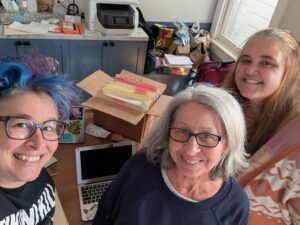
Our February workshop went well – small but fruitful! Unfortunately, I forgot to take photos, but we had a lot of fun!
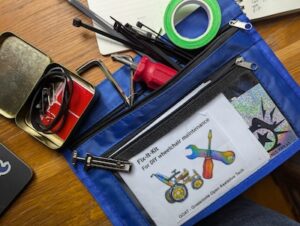
People liked the maintenance kits and zines, and we all shared stories of our chairs breaking, repair techniques, watching online videos for tips and tricks, and of course, dealing with insurance and trying to source parts for older chairs.
Several new volunteers came to help out, some with bike or car mechanic skills and others just generally handy. Mostly that meant, working one on one with workshop participants to figure out if they could use particular custom tools or parts. Our volunteers (Maureen, Mike, Luis Felipe, Jake, and Olga) were also super helpful in finding service manuals online to email them to device owners!
And, Marisol showed off the Assistive Tech lending library while Vince shared his experiences as a wheelchair repair tech over the years.
One of our William had some amazing sites and resources and knowledge to give us. I’m hoping he will become a GOAT volunteer!
– https://brokenwheelchairs.com, which has incredibly useful information about some of the most common powerchairs, like service manuals, sizes of attachment rails, and other great repair adjacent stuff. I am reaching out to the creator of that site to see if GOAT can be helpful to them !
– White Raven Mobility, which has 3-D printed joystick and other small modifications available for sale at a fairly low cost – by a wheelchair user who is a maker and inventor!
– Build My Wheelchair – A parts and battery shop, not cheap, but sometimes you can find a deal. And what they are really good for, is you can order parts through them, when manufacturers won’t sell direct to you.
– MyATProgram – This is a program in several different states that functions as a lending library for assistive tech.
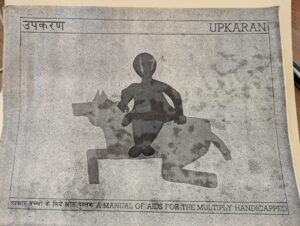
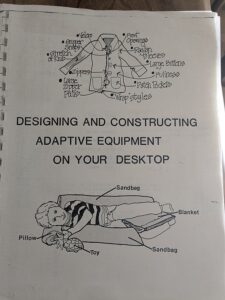
For our actual workshop we passed out the toolkits and zines, and then had a lot of extra tools and parts laid out across some tables for kit customization.
This was a great pilot event that helped me figure out what is workable in an hour and a half to two hours. For our next event, I will have a new version of the zine, and the workshop itself will have a bit more structure.
Rather than one two page spread to write down lots of different pieces of info about the device, I think we need to first frame what we are doing and why!
That means a quick round of simply listing
1. Things that have broken or worn out in the device in the past. NOT a long story – just a list.
2. Things that you wish you could modify about the device in the future. For example, stronger hooks for carrying things on the back of the seat, or a more accurate and informative battery level readout.
3. Who helps you, or might help you, with maintenance and DIY repairs? Who might learn with you and be supportive?
From there, I think we would be more ready to jump into gathering information about the specific device, and have some goals in mind.
We can aim our work at, becoming more prepared for the next time something breaks, or be able to prevent that breakage!
And, at following up later on the things that aren’t broken but that we want to change – like those stronger hook systems!
The other thing I found in our workshop is that, this subject is broad, deep, and powerful. We all as wheelchair users or assistive tech users have strong feelings about our relationship with our equipment. We depend on it like parts of our bodies. When stuff breaks and especially when we run into the enormous problems and limitations of insurance, Medicare, vendors who don’t respond, and so on — or even facing being without our critical devices for weeks or months — It can be a traumatic experience.
So, any wheelchair fixing workshop kind of tends towards story sharing , peer skill sharing, and I would say, a deepening of political awareness and solidarity. None of those stories are things that I want to fend off or interrupt. But, my thought is to make space for them towards the end of a workshop and follow it up with info on how to file complaints, how to use Right to Repair law, and other kinds of advocacy and activism we can use in those difficult situations!
The same thing is true to some extent of any kind of tech support. At least, with some of my old experience in IT, I felt it was so — my job was only partly “fixing computers” and was much more about listening to people, doing a kind of combination of therapy and pedagogy to try to get people to a place of empowerment rather than trauma and fear.
Meanwhile, I ahve great news I’ll talk more about soon, which is that we got some substantial donations! This means we can expand our toolkits and the range of tools we have available, and run more programs, as well as re-doing and expanding the Fix-It Zine.
Our Fix-It Zine in a more general form, version 2, will be available soon to buy or download & print free!
Leave a Comment