Press "Enter" to skip to content

Author: Liz Henry

Tune ups and tear downs

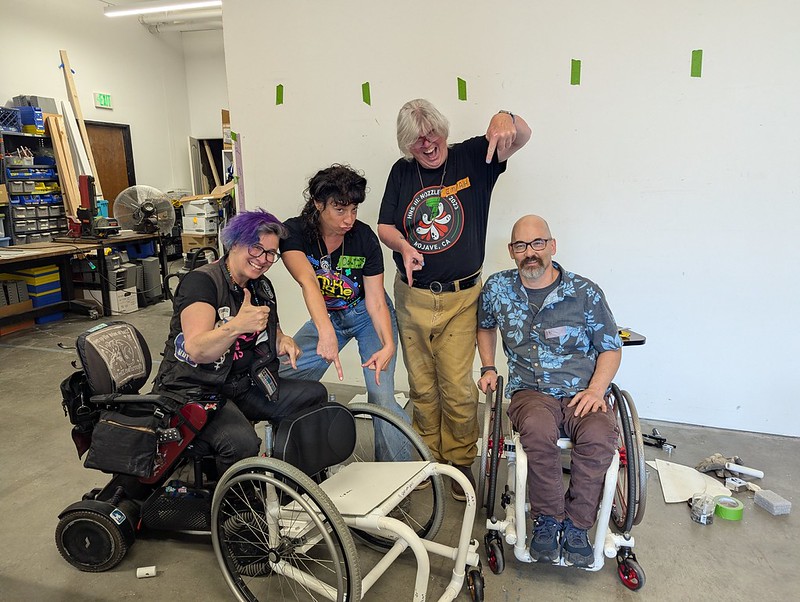
Our September Tune Up Tuesday was held at the San Francisco Disability Cultural Center. We had a fairly low turn out this month, which meant we were able to do some more detailed work with the people who did show up!

Volunteers Dewi and Angello, with help from Olga, fixed up a brake on DCC neighbor Naya’s ebike. She can only operate the brakes with one hand, so it was important to have the rear brakes working – on the side she can use, and also the safer ones to do one-handed. We studied how to move the front brakes to that side, and it’s possible but would need a more in-depth follow up. To get it done, we’d have to cut off the handlebar grips and then replace them. But our customer was very happy just being able to safely use the brakes now on this beast of an e-bike!
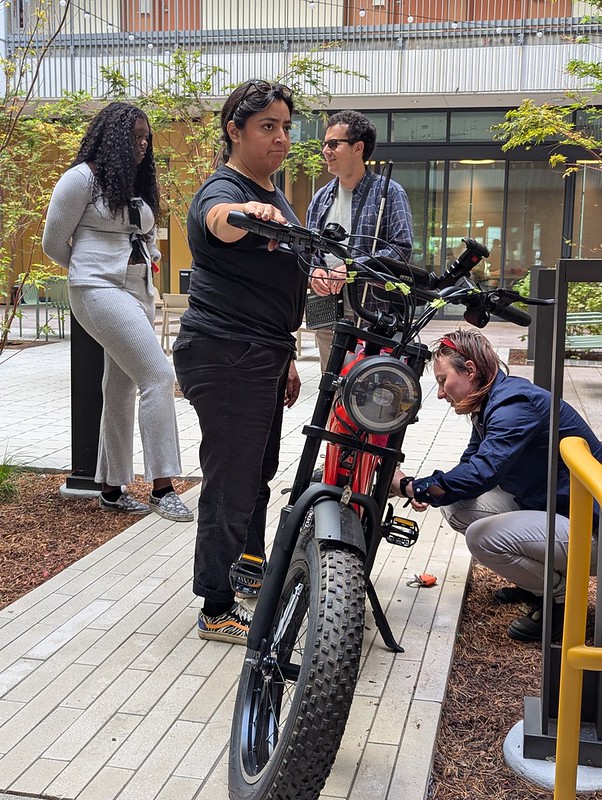
Dewi, olga, and angello tending to an ebike

Our new EZ-jack went to good use as we took off a squeaky wheel, lubricated its bearings and put it back on. Success! I got on the floor with Dewi for this one.
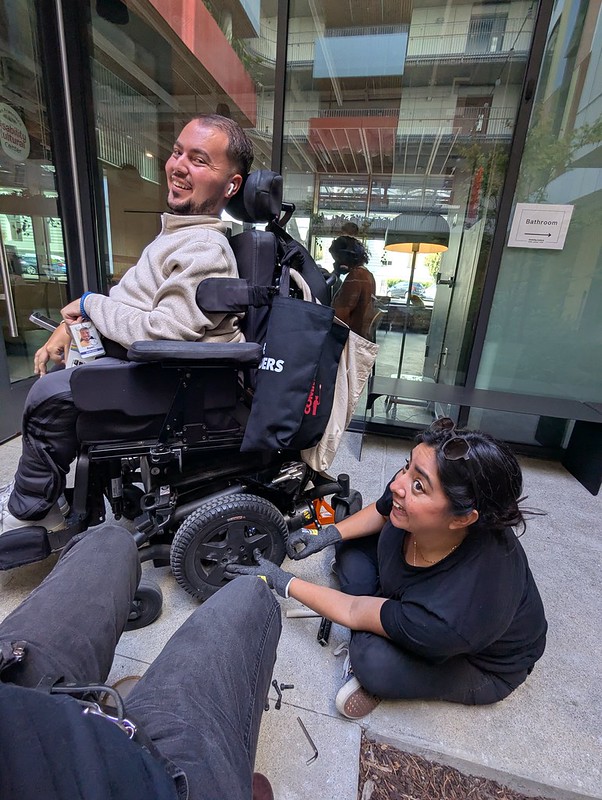
man in powerchair with a woman on the floor next to his rear wheel with tools

We worked on my chair too, taking off the wheels, studying and comparing its wheels with CriptasticHacker’s Whill Fi. Some interesting experiments are in the works – scanning and 3D printing a new wheel hub for the Fi so that it can use standard (cheaper) solid scooter tires rather than its annoyingly fragile pneumatic rear wheels. If this works it will be so useful for me and CH and probably many more people who use the Fi. We discussed maybe trying to fill the old wheel with some kind of hardening spray foam but settled on printing a new wheel hub from tough filament.
a 3d scanner and a powerchair wheel

At GOAT Space, volunteers and staff fixed a ton of chairs including getting through some of our “backlog” of donated chairs to give away. New intern Reina showed up like a champ and spent a day figuring out how to get three different ultralight manual chairs rolling again. They are in our inventory as Moana, Lilo, and Elsa. Lilo, the white and purple Quickie, has already been adopted out!
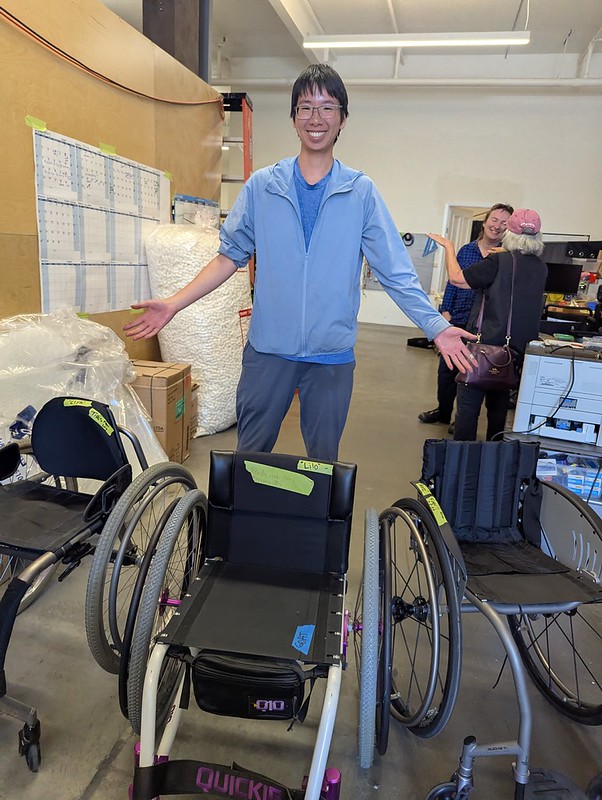
tall brown skinned person spreading arms over three manual wheelchairs

You may not realize how exciting this is for me personally. My first wheelchair, in 1993 or so, was crushingly heavy. I couldn’t push myself very well in it and I had had recent shoulder surgery, but I needed to get to classes and do things like grocery shopping and so on. I would accost strangers in the campus parking lot to beg them to push me to class. When I got a (donated) Quickie ultralight chair everything about my life changed and I was able to be so much more independent! Riding a rigid frame, ultra light chair is basically gliding around like a graceful swan. You push just a little and sail across a room. Sidewalks aren’t as easy, but they become _possible_.

And, the kicker here is that they are going to cost you like 4 or 5 thousand bucks. It was never easy to get a decent chair covered by insurance and now it is even harder. So this independence and ease of movement is out of reach for most people.

The difference is not like having a Ferrari vs. a normal car. It is like having a normal car vs. having a child’s scooty toy with fake pedals and a push handle.

I am very happy that GOAT can help the other organizations in the Bay Area to fix up high quality donated chairs and get them to people who need them!

Tons of things happened at GOAT Space in the last few weeks and it’s hard to sum them up. Here’s a little glimpse though of me on the floor taking apart Mia’s wheelchair cushion to add new foam to it. Our electric box cutter does a great job of cutting through dense foam!

We fixed up some other stuff on her chair, taking apart a bunch of the seat back and extra supports. Mia hung out on the couch doing most of the sewing for this project, which was good becuase I immediately stabbed myself in the thumb. (Note to self, bring several thimbles and leatherworking tools to the space.) We added a lot of velcro, with advice from Olga, and now all the separate little pillows and straps and supports (ingeniously added over time by Mia and friends) are completely integrated into the seat back and cushion!
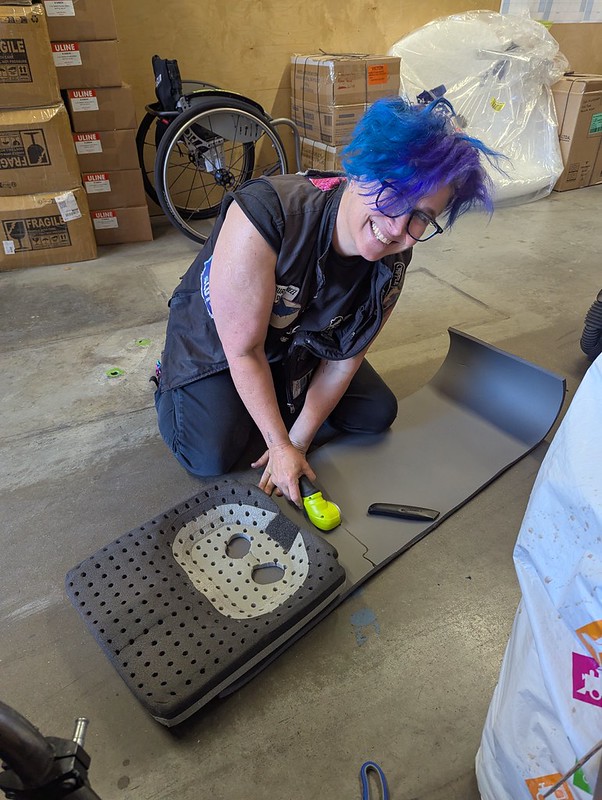
purple haired person on the floor smiling while doing surgery on a cushion

Wheelchair cushions are interesting. We are going to look into making our own silicone gel inserts, for older cushions where the gel cushion has leaked and potentially being able to carve out our own dense foam bases for the gel. It is important to understand how a person’s weight hits the cushion. Pressure sores or any sort of skin friction or breakdown are no joke.

Like with ultralight chairs, you have to fight for anything that isn’t a foam brick. If you are elderly you may not even get the dignity of a cushion on top of your hideously uncomfortable seat sling. If you remember sitting in the kind of playground swing that was made of flexible rubber, you will remember your ass squashed by rubber and chains which wasn’t a big deal when you’re 10 but if you are 50, or 80, it most definitely is. A folding x-frame hospital wheelchair with this kind of seat sling is like a torture device if it doesn’t have a cushion and you’re sitting in in for more than a few minutes.

My point is that a decent cushion costs something like 500 bucks. I’m pretty sure we can hold some classes in DIYing them for much cheaper!!!

Earlier this month — GOAT staff and volunteers joined the CIL Assistive Tech folks at the Wheelhouse in Oakland for a “Teardown Party” to take apart powerchairs for parts and scrap. It was a convivial atmosphere as we shared tools & music, and helped each other with stubborn, tight bolts!
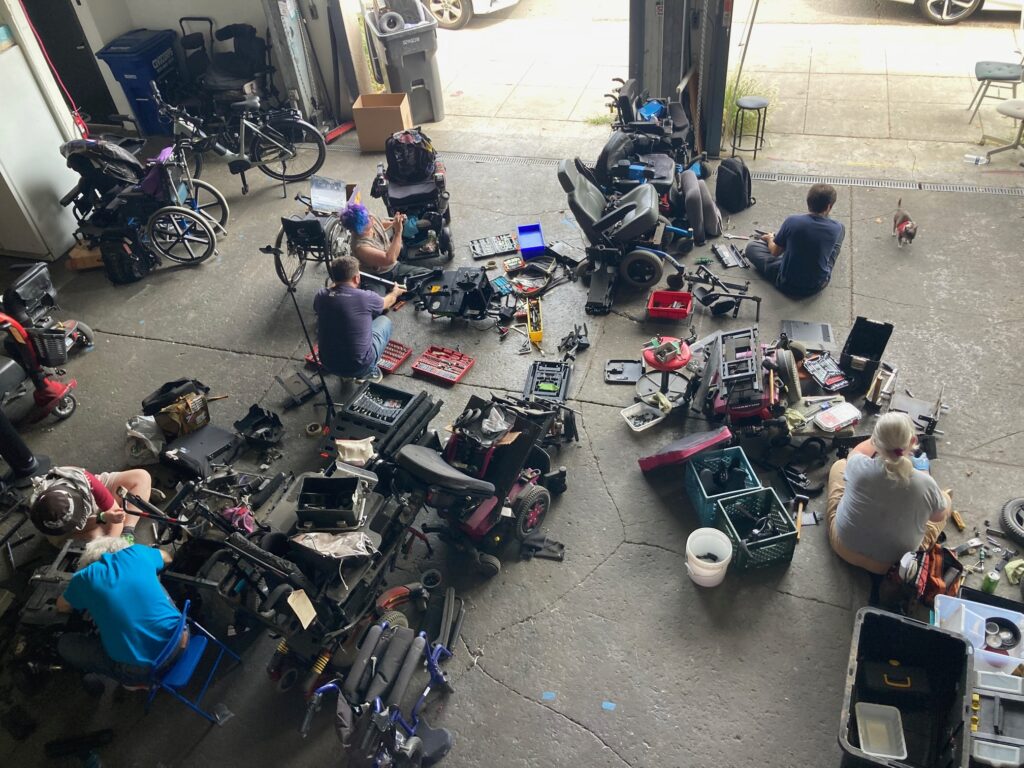
overhead shot of several people on the floor surrounded by tools and half taken apart powerchairs

It was a lot of fun! I was sore afterwards from sitting on the floor and wrestling with giant wrenches but it was just a pure rush in some ways and I learned a bunch about how a Quantum chassis is put together. It was also super fun to hang out with Anna from ReCares and gossip about our work! When this party happens again I will be sure to invite everyone !

As usual, if you want to support our work PLEASE DONATE! Anything is helpful! I especially want to encourage Patreon subscribers, or you can subscribe to this VERY BLOG! If you work for a big company, donate through their corporate matching program to double your impact. Thank you!

Leave a Comment
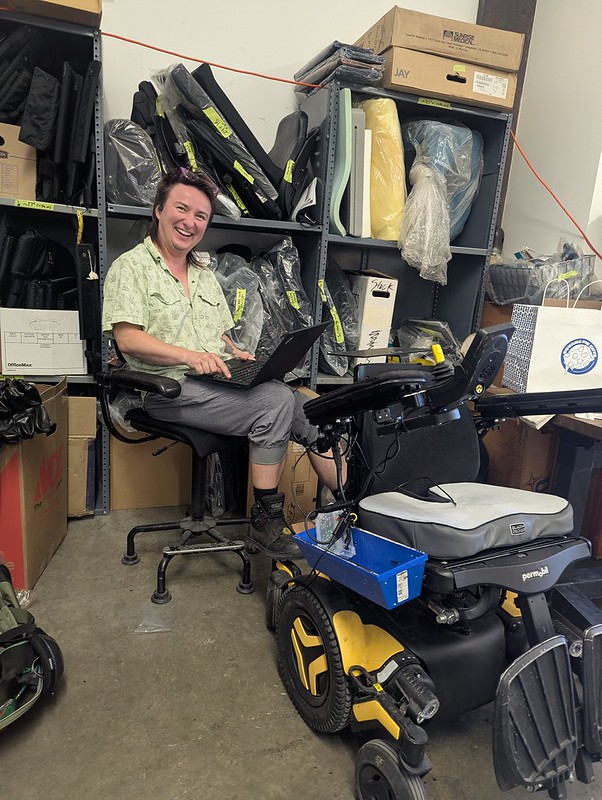
GOAT Learning Labs: Meet the Power Wheelchair

We are starting up a series of short classes, on Mondays at lunchtime, on the weeks where we don’t have a Tune Up Tuesday. The the first class is TOMORROW. Don’t worry, they will be recorded and posted on our site! And you can also join remotely to follow along with GOAT assistive technology professional in training, Olga Prilepova.

Smiling person sitting with a powerchair in a workshop

Class description for Monday, Sept 7, 12pm – 1pm Pacific

Ever wondered what’s actually inside a power wheelchair — or why two chairs can feel completely different? We’ll explore several power wheelchairs, identify their major components and features, compare drive systems, and talk about how design choices affect everyday life.

No experience needed; questions are welcome.

Physical location: GOAT space (behind Bookmark Bookstore in Oakland)

Remote participation via Google Meet: https://meet.google.com/uwx-bbzy-axk

Lesson plan: 2026-09 Learning Lab Notes

Link: https://docs.google.com/document/d/e/2PACX-1vQzYpUAWmC2EEr8fgYjBkjICsihNt7ZKwEHryUzQ5U7RMqVv_3nLD7CncCACWRCSmlk0xCUY7w-KZzu/pub

Check the Events page for upcoming classes!

Leave a Comment

Open Source Wheelchair Build Day

The day after the BARC Summit, we hosted an Open Source Wheelchair Build Day at GOAT Space. This was a smaller and more freeform event to get together some amazing assistive tech hackers, inventors, and builders to explore what we might be able to do together. We had 20+ people drop in over the day.

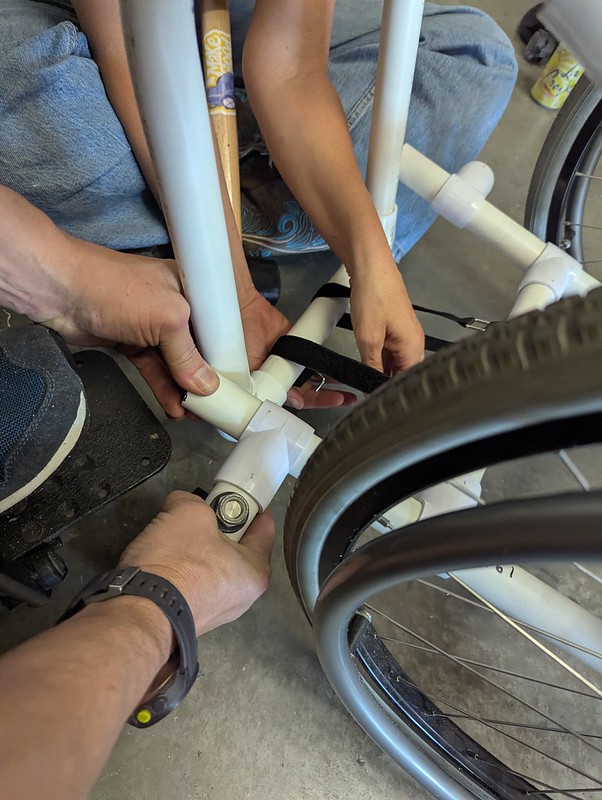
three people's hands pulling together a pvc pipe wheelchair

Erik Kondo from https://opensourcewheelchairs.org flew out to us (with travel money from OSHWA) actually riding a chair he designed and built from PVC pipe, the Piper. He also shipped us the kids’ version, the Half-Pipe for us to use as an example.

Ralf Hotchiss came and talked to us about his experience creating the Rough Rider and making it internationally available via his organization, Whirlwind Wheelchair International. It was amazing to hear his stories from the 60s, 70s, and 80s and beyond! He also was so helpful in the actual build process for the Piper even though I was a little embarrassed at our not-yet-complete workshop and machine tools!

Two manual wheelchair users pose together, arms and wheels linked
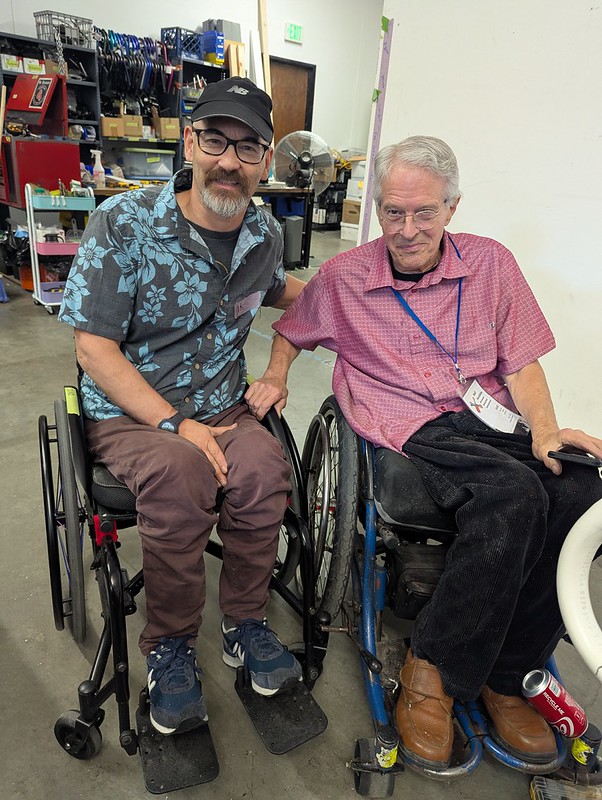
Erik Kondo and Ralf Hotchkiss

Dana Schwachman from Make Good talked about her designs for TOM and the new, still evolving designs for Make Good’s 3d printed Toddler Mobility Trainer chair. Dana was also a hardworking, expert builder as we worked on the Piper!

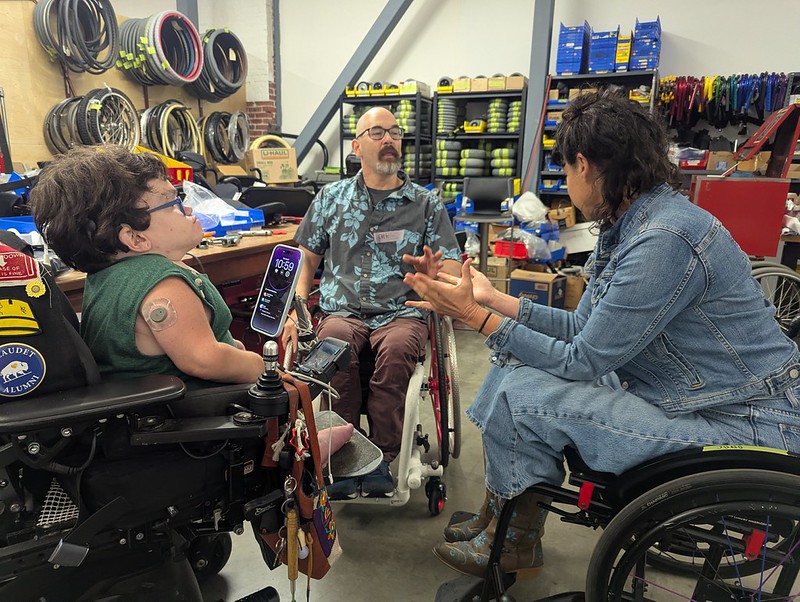
two wheelchair users, talking with dana, workshop background
Ian, Erik, and Dana deep in conversation

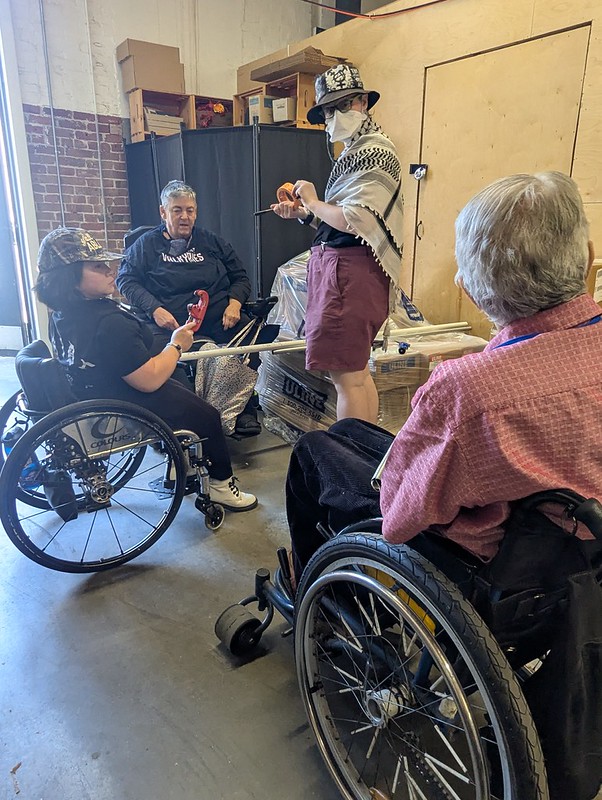
And Corbett O’Toole was there to help teach various skills and talk with everyone about what it is possible to make, invent, and modify. Corbett was doing a lot of work getting people to try things they had not experienced before (like using pipe cutters or other tools).

several wheelchair users and one standing person with pipe cutters

The day is hard to describe because so many things were happening at once, and I was running around looking for things people needed and doing other “host” things nearly the entire day. Also, during the event, people dropped in and asked for fixes or loaner equipment or dropped things off for us! So we were operating as usual in the middle of our event — wheelchairs don’t stop breaking and people don’t stop needing stuff!

We need better (sharper? electric/bandsaw? ripsaw? everything) stuff to cut with, and need to set up our drill press before we do another build day! A dremel would also be good.

I have more to say about the day, and some nice short video clips to share later, but wanted to do a quick summary of our experience!

We didn’t have time to do any prep or a test build, as this was a very spur of the moment event (only planned one week ahead of time!). Next time, we will be more prepared with our tools and parts and supplies though.

The Piper design currently up on Erik’s site is basically a parts list with a little extra info and pictures. There are also some videos out there. We struggled a little cutting the side guards, and with what order to assemble things in, and caught a few parts errors and omissions. When we do a full documentation of a step by step build we’ll also include the list of tools you will need and a time estimate. It took a fairly chaotic crew of us a solid afternoon to get the Piper cut out, the tubes bent, and the chair assembled, but we didn’t actually drill the holes for the bolts so while it looked good, it was not testable yet! That final step should be coming soon, maybe this week.

What I had not realized is that the Piper model Erik was riding is the first and only one he built. Every time he builds, it is something new to test out a new idea, meeting a different need or using new materials. I think this design is good enough that our “adding new step by step documentation” contribution will be useful to other people who want to try out a build and would like more detailed instructions.

It could also be a great class project, for example, preparing the parts in one class, then doing the assembly in a second class. Or having a skilled team do the cutting and bending, and inviting students or volunteers to assemble several chairs at a build party, like Make Good’s hosted events!

Another goal once we get that step by step info more solid, could be an online tool for measuring a person and resizing the chair to custom fit them. We had two visitors last week who actually built a custom Piper last fall, so we are hoping to learn more working with them!

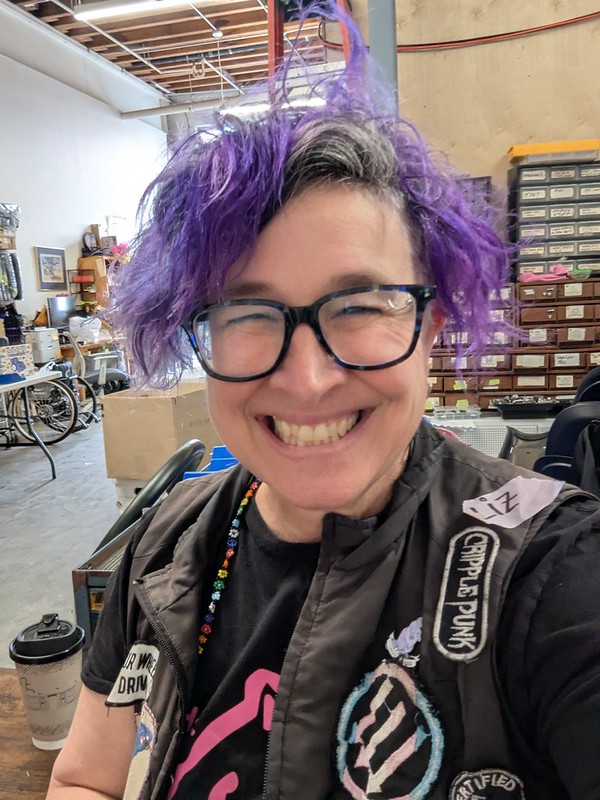
nonbinary white wheelchair user grinning happily in the workshop

several people smiling in a workshop with a pvc pipe wheelchair in front of them
The final Piper build with die hard crew
Leave a Comment